
What does the Work Environment Act say about your responsibilities?
As an employer, it is essential to understand your obligations under the Work Environment Act.
The importance of a healthy work environment
The Work Environment Act establishes employers’ responsibilities to proactively and systematically prevent ill health and workplace accidents, and to ensure a healthy work environment for all employees. The work environment includes all conditions and factors that may affect employee well-being, including technical, organizational, social, and physical aspects.
This means creating a safe and healthy environment where the employer carries significant responsibility for adapting all aspects of the workplace to minimize risks and promote employee well-being.
Hartic consists of eight core areas made up of approximately 250 evidence-based elements. These areas are grounded in strong research and form the foundation of a healthy work environment, as well as employees’ and managers’ sense of satisfaction and well-being at work.

General requirements
The work environment must be adapted to the nature of the work and to societal development. Working conditions must take employees’ physical and psychological capacities into account.
Employees should have the opportunity to influence their work situation. The workplace should be designed to prevent physical and psychological strain that could lead to ill health or accidents. Work should be varied and promote social interaction, as well as personal and professional development.
Safety and hygiene
Work must be planned and carried out in a safe and healthy environment. Work premises and equipment must be designed to prevent risks such as falls, fires, explosions, and similar hazards.
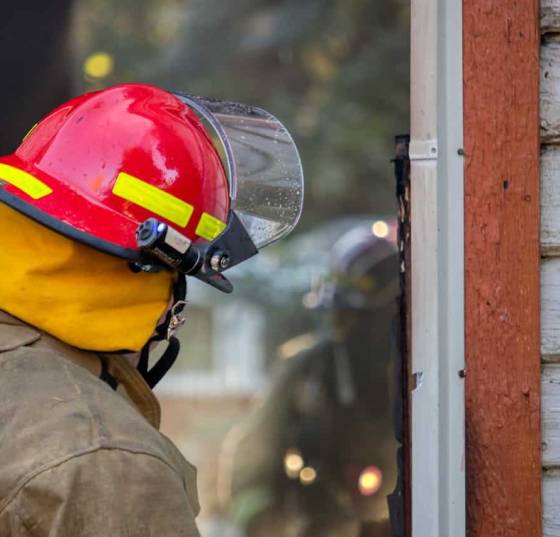
Protective equipment must be used when other protective measures are not sufficient, and the employer is responsible for providing it.


Working hours and other factors
Working time regulations are governed by the Working Hours Act, with specific provisions for certain occupational groups such as seafarers and minors.
Air quality, lighting, noise, vibrations, and other workplace factors must be satisfactory. Facilities for personal hygiene, rest, and first aid must also be available, particularly in workplaces such as ships or road transport operations.
Systematic workplace management
As an employer, you are required to systematically plan, direct, and monitor operations to ensure that the work environment meets prescribed standards. This includes assessing workplace risks, investigating occupational injuries, and implementing corrective measures. Workplace management must be documented and action plans established.
Employees are required to participate by following regulations, using protective equipment, and reporting immediate dangers to life or health.
The Swedish Work Environment Authority’s regulations, known as AFS, provide detailed guidance on how the Act is to be applied across different industries and activities.
AFS 2015:4 specifically addresses organizational and social work environment management. AFS 2001:1 provides detailed guidance on how employers can work systematically by assessing, implementing, and following up on workplace initiatives.
The overall purpose is to ensure a safe and healthy work environment, with both employers and employees sharing responsibility.
Occupational health services
As an employer, you must provide access to occupational health services when working conditions require it.
Occupational health services act as an independent expert resource, supporting the prevention and elimination of health risks and helping organizations understand the connection between the work environment, structure, and productivity.
When Hartic clearly indicates that external occupational health support is needed, you can feel confident knowing that we collaborate with partners across Sweden who can assist you.

Safety representatives
A well-structured work environment effort is a shared responsibility between employer and employees. Workplaces with at least five employees must appoint one or more safety representatives, typically through the local trade union.
The safety representative plays a key role in representing employees in work environment matters. They ensure that the employer complies with regulations and actively participate in planning new or modified workplaces and working methods.
If a safety representative determines that work involves immediate and serious danger, they have the authority to temporarily stop the work.
Safety committee
For larger workplaces with at least 50 employees, establishing a safety committee is mandatory.
This committee consists of representatives from both the employer and employees and works with planning and monitoring workplace management efforts.
Its purpose is to ensure effective collaboration between employer and employees.

Sanctions and liability
Chapter 8 of the Work Environment Act (1977:1160) addresses sanctions and liability in cases of violations. Below is a summary of key provisions.
Section 1 states that anyone who intentionally or negligently violates an injunction or prohibition issued under Chapter 7, Section 7 or 8, may be fined or sentenced to imprisonment for up to one year. If the injunction or prohibition is associated with a penalty payment, this sanction does not apply.
Section 2 outlines specific violations that may result in fines. These include situations where a person:
• Employs a minor in violation of Chapter 5, Section 2, first paragraph, or regulations issued under Chapter 5, Section 2, third or fourth paragraph.
• Violates regulations regarding minors’ work under Chapter 5, Section 3, second paragraph, or Sections 4 or 5.
• Provides incorrect information when a supervisory authority requests information, documents, samples, or inspections under Chapter 7, Section 3 or 4.
• Removes or disables a protective device without valid reason.
• Fails to inform the supervisory authority in accordance with Chapter 3, Section 3 a.
The purpose of these provisions is to ensure compliance with work environment legislation by introducing penalties for violations, with particular emphasis on protecting the safety and well-being of minors in the workplace.